
The business of body dysmorphia
Human vanity
Humans care about how they look. In a survey of roughly 100,000 people across 93 countries, women reported spending an average of just under four hours a day on their appearance, and men about three and a half. [1] This includes selecting what a person wears, showering, grooming, and looking into the mirror. The strongest predictor of beauty-enhancing behaviors, according to the study, was social media usage. Age mattered, but not in the expected direction—the youngest respondents spent the most time, and so, unexpectedly, did the oldest.
From an evolutionary perspective, appearance enhancement is usually read as mate attraction. Male birds with elaborate plumage attract more mates. The better you look, the greater the attraction. Women from countries with higher gender inequality tend to spend more time on appearance. Where women hold less economic power, appearance does more of the work.
Image revolution
Over 90% of women report overall unhappiness with their bodies, and 97% have at least one critical thought about their bodies daily. This starts as early as age 10 and skyrockets in adolescence. Only 25% of men feel very or extremely satisfied with their appearance.[2]
Body self-image is never finished. It begins forming in early childhood and stays open for the rest of your life. What little freedom a person exercises in their brain is usurped by images. We are inundated with thousands of images of ideal bodies and standards of beauty every day. Celebrities are in on the act too. Jane Fonda, for instance, looks forever young, at least 30 years younger than her actual age.
Your brain begins to seek an idealized version of you. First, perceptually, because scientifically the right and left side of your face are different; they are not symmetrical. Your brain is your first critic. Few people, for example, think they look great in a plain glass mirror. Donald Fisher, co-founder of GAP, once told me it’s better to add rose tint to mirrors in the dressing room to help people look better and buy more items.
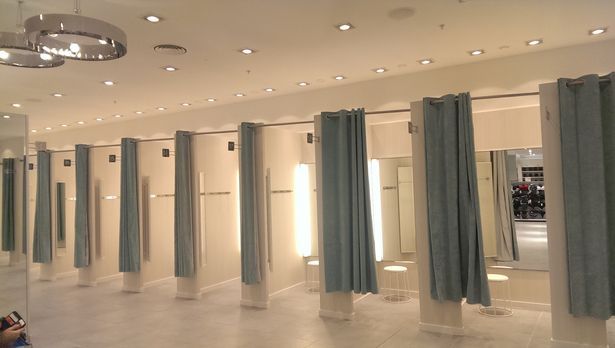
You begin to imagine a perfect body, one that you most desire as time goes on: an edited nose, lips, eyelids, boobs, buttocks, and no stomach fat. Just the right skin color and no unwelcome facial hair. And if you lack a full head of hair, you can buy transplants.
The target is perceived perfection, and people will pursue it relentlessly. It’s a Barbie culture on steroids. Every dollar you spend is part of a $72 billion global business that is anticipated to grow to $160 billion by 2033.[3] The scale is easy to understate. American plastic surgeons performed roughly 1.6 million cosmetic surgeries in 2024, from liposuctions, breast augmentations, and tummy tucks. The same year saw more than 28 million minimally invasive procedures: neuromodulator injections, fillers, laser resurfacing. Injectables alone accounted for nearly 10 million. Nine out of every ten procedures a plastic surgeon performs no longer involve an operating room, which is partly why the numbers keep climbing. The male equivalent of seeking body perfection grew by 95% over the last five years.[4]
Over 20,000 individuals, mostly women, traveled to Medellin, Colombia, where I live, for cosmetic surgery last year. Procedures here run roughly 40 percent below US prices. Medellin has become a global hub for cosmetic surgery, marketed and consumed through social media[5]. Welcome to the world where fake is the new real.
Even White House deputy chief of staff Stephen Miller recently opined on body aesthetics. Miller told diplomats from more than sixty countries that Antifa demonstrators are physically marked by their politics: “not one of the people that is demonstrating looks like a normal person. Not one looks normal. They’re all deformed in some way – in their appearance, in their dress, in their mannerism.”
Cultural pressures add to the prevalence of a recognized psychiatric disorder called body dysmorphic disorder (BDD), which affects roughly one in fifty people — an obsessive preoccupation with a perceived flaw that others can barely see or don’t see at all. It’s not vanity. People with BDD check mirrors compulsively or avoid them entirely, and many are unable to work or leave the house. What makes it relevant here is that rates of depression and suicide are much higher than a so-called normal population where self-surveillance is typical and rewarded by more likes or clicks on social media.

Mirror, mirror, on the wall
The setting is a coed gym, Body Tech, in Medellin, Colombia. It’s not unlike a gym where I worked out in the Bay Area, California. Weights and workout equipment are surrounded by mirrors covering every wall. Work out. Look up. Repeat.
I decided to ask a few questions randomly to two young women working out—in their late twenties or early thirties—looking intensely at their bodies in the mirror. The edited responses below are real. Names have changed for the interviews to protect privacy.
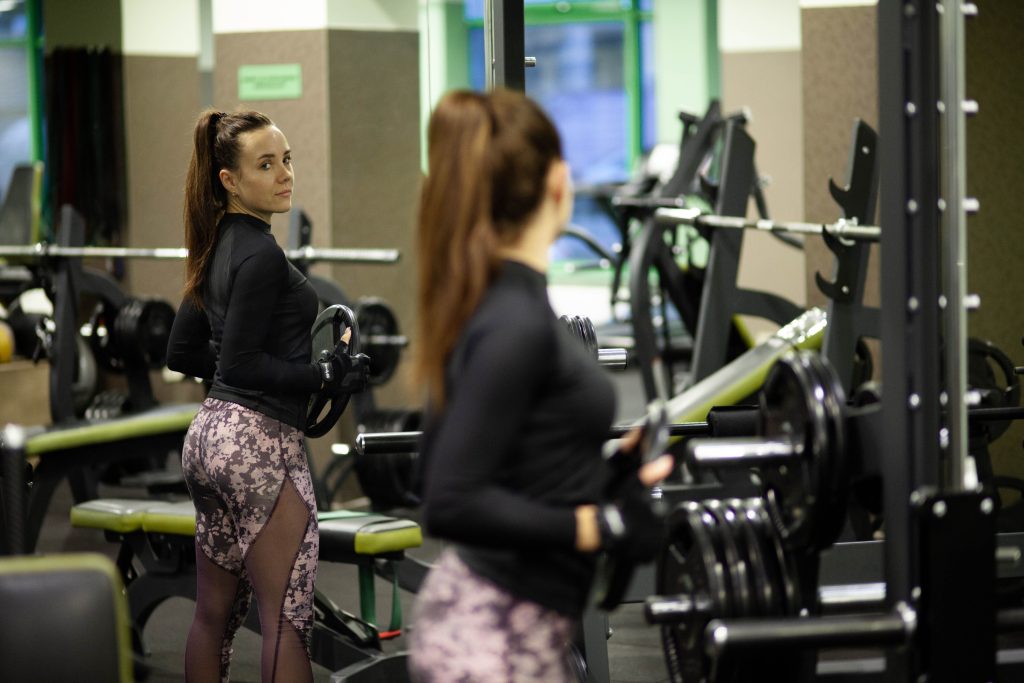
Me: Excuse me. I noticed that you were looking in the mirror at your body. What’s your name?
Interviewee: Ellie. Yes, I wanted to see how I look.
Me: Anything in particular that you are focused on?
Ellie: Well…(shyly)…my boobs
Me: Your boobs? They look fine. Was there a problem?
Ellie: There was…
Me: Can you say?
Ellie: Sure. I had my boobs done because my boyfriend wasn’t happy with them. He wanted them more perky.
Me: Something happened?
Ellie: (becoming emotional) He didn’t like them and pushed me away. He thought they were worse than before. I was so upset, crying and depressed.
Me: What happened?
Ellie: We separated. (Quick to point out) But they look way better than before. So, in the end, I’m glad that I had them done.
Me: (Reassuring) Maybe you’ll find a new boyfriend…
Ellie: I already have one…
Me: And?
Ellie: (Big smile) He likes them! No problem. (Lifts them to show me)
Me: Congratulations. Just one other question. If it’s ok.
Ellie: OK.
Me: Is that a tattoo on your boob?
Ellie: Yes. It’s a dragon with a long tail. It goes all the way…
Me: That’s OK. I was just curious.
Me: (I turn) I noticed you smiling. And admiring yourself in the mirror. What’s your name?
Interviewee: Veronica
Me: Do you know each other?
Veronica: Yeah. From the gym.
Me: Are you Colombian?
Veronica: Yes. From Medellin.
Me: You look fit. What part of your body are you focused on?
Veronica: My backside…
Me: Your backside? You mean your butt? Gluteus maximus?
Veronica: Yes. I am trying to shape it better. I’m having it done now.
Me: Done?
Veronica: Yes. I want to accentuate it more. More curves. It’s too flat. No one likes a flat butt. It’s not sexy. Like thin lips.
Me: How do you fix your butt?
Veronica: (Smiles) I’m having a Brazilian Butt Lift (BBL). The doctor takes fat from my stomach and uses it to shape my butt. I lose weight and get a bigger butt too.
Me: How big will it get?
Veronica: I’m not sure. But, I showed the doctor a picture on my phone. I’ll see how I look in Colombian Butt-Lift Jeans. They have a heart-shaped low back. It makes my boyfriend smile and other guys too (Smiles).
Me: (Smiling) How much does the Butt Lift cost? May I ask?
Veronica: I don’t know exactly. Maybe around $4,000 USD.
Me: That seems super expensive.
Veronica : (Smiles) I have a friend who’s paying.
Me: Lucky you.
Points to ponder
The cosmetic surgery market is booming. The procedures are easy to book and easy to finance. The trend toward self-surveillance and social media-savvy appearance is here to stay. Swipe left or right and capture someone whose look you like. Desired features are the key to attracting fellow creatures.
What’s your body AQ—attraction quotient—is the question of the day. But no worries, you can edit and sculpt your parts as you wish–well, within limits.
Ask yourself why this insatiable drive to appear as an idealized version of yourself?
Is cosmetic surgery to enhance attraction the highest and best use of medical talent and resources?
What happens in a few years, when the changes have settled and you look much as you did before?
It may be worth talking to a mental health professional before making permanent changes to your body—and worth spending less time on the platforms that make those changes feel urgent. You may be perfect just the way you are.
References
- [1] Evolution and Human Behavior, Dr. Marta Kowal, 2022
- [2] Healthcare, (Basel study), July 12, 2024
- [3] Grand View Research, cosmetic surgery, market report, 2026 to 2033.
- [4] American Society of Plastic Surgeons, June 25, 2025
- [5] Medical tourism, YouTube, March 1, 2026
- [6] PBS News Hour, July 16, 2026