
The Psychology of Desensitization in Modern America & How to Wake Back Up
Violence
Everyday political and social life under U.S. President Donald Trump has become increasingly violent. Violence in this context means the use of force to deny individual rights, and frame peacetime discourse and activities in terms of war. Trump is transforming American democracy into a live video game where many feel attacked and threatened. His administration is disrupting the baseline of safety that most citizens in a democracy depend on for well-being.
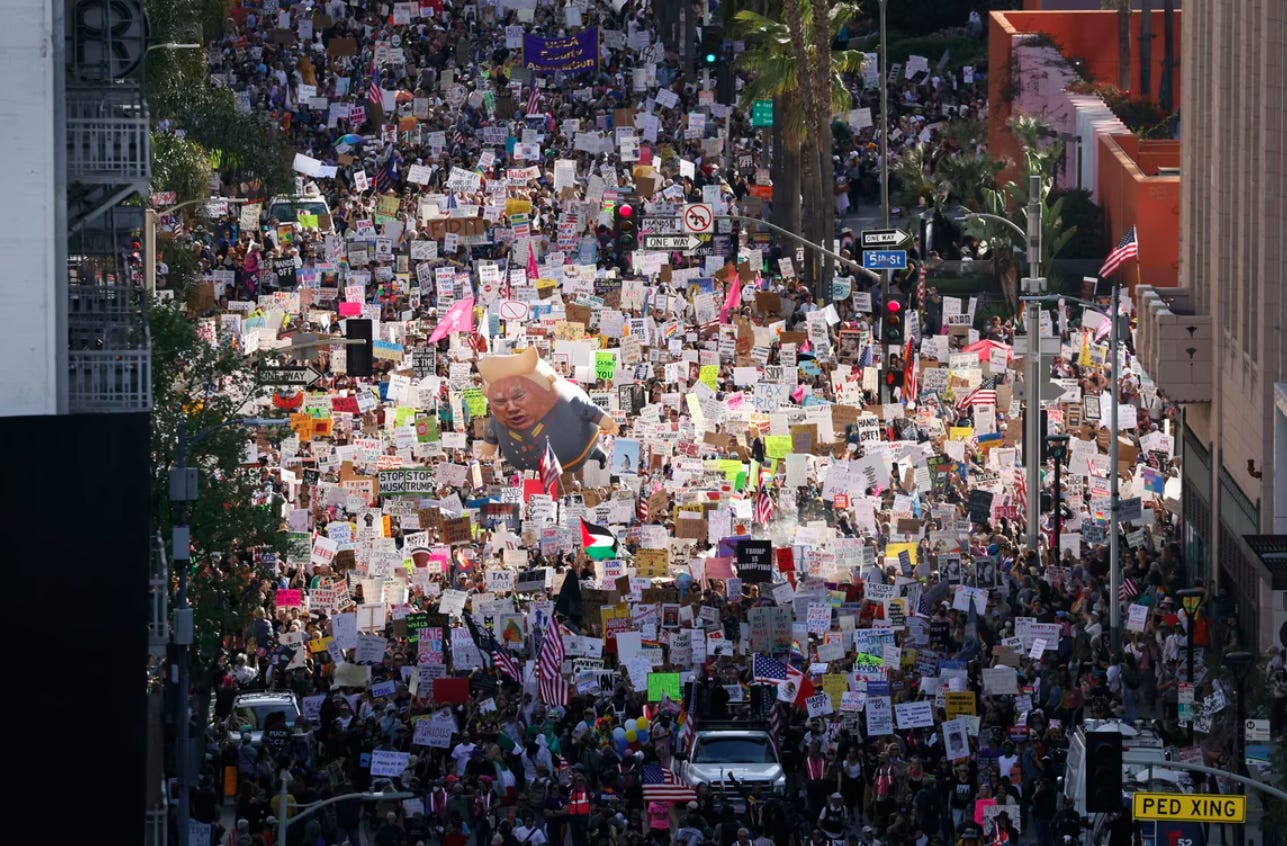
Under current social conditions, many individuals have become desensitized and detached. They feel overwhelmed by 24-hour newsfeed and social media showing the violence of the U.S. Immigration and Customs Enforcement (ICE) raids, which force people into unmarked cars or break into their homes, unwanted military interventions into cities such as Washington D.C, Portland, and Chicago, deportations of pro-Palestinian protestors, capturing mothers with children and separating them, changing the name of the Department of Defense to the Department of War, and inciting a warrior culture; one without women who are, apparently, too weak to fight. All this happens day-in and day-out.
Among Latinos, many are afraid to seek medical care, attend public gatherings, or go to work for fear of being singled out and abused. Protestors of all races, colors and creeds are also afraid to attend public gatherings because of ICE and other vigilante groups supported by the government. This is destroying our social fabric, and violating the Constitutional rights of Americans to free assembly and redress of grievances.
The young are also being targeted: many teens report more fears of leaving the house. They are being pitched unwanted social media images and tag lines in the form of ‘Newsfeeds’, ‘Stories’ and ‘For you’. AI and algorithms are being used to promote images of violence and social control. The government, with the cooperation of social media companies, is issuing warnings through images of violence to dissuade political involvement of young people. The mainstream media also does more than their share of destruction by enabling Trump to rule by spectacle, grandiosity and violence.
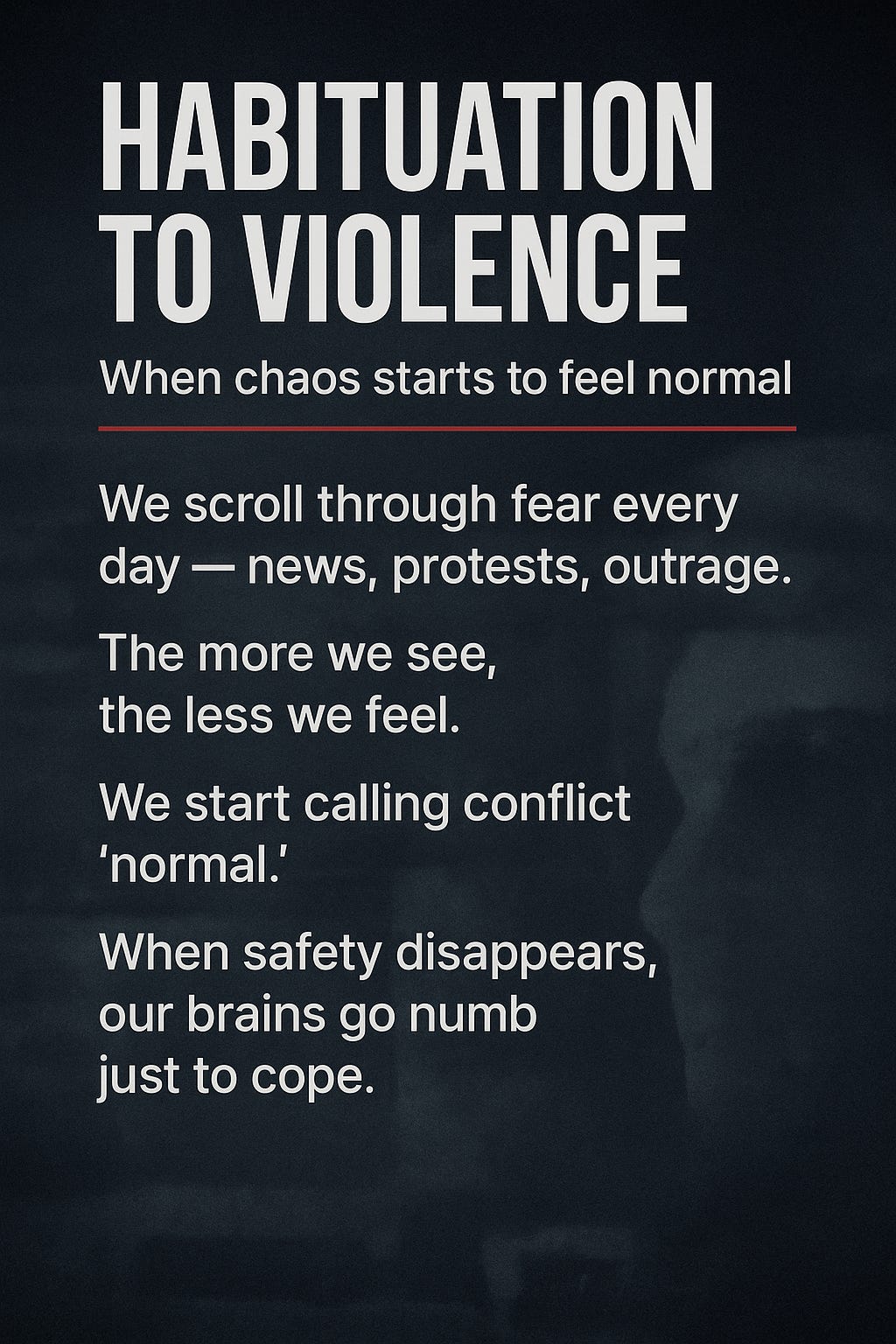
Habituation to violence
Trump’s government is habituating us to violence to increase control. Their message is that in a dangerous and chaotic world only his administration can rule effectively. Desensitization is a coping mechanism whereby our inner arousal systems to violence are disabled by feeling overwhelmed.
We seemingly adapt to a dangerous situation, ‘as if’ we are safe. Yet, this avoidance, unwittingly, increases our tolerance for violence, reduces empathy for victims, and negates useful, genuine survival-oriented behavior. Feelings of ‘being down’ or low-level depression often follow. We shut down, ‘turn-off’, and retreat when we should be actively opposing what’s happening.
Initial signs of desensitization are:
- Denial and rationalization: Ignore the news. It will blow over. What’s happening is just an exaggeration of normal social processes until the government works it out. It’s complicated. Police and ICE activities are only exaggerated in the media. It doesn’t make any difference to me since it doesn’t apply to me.
- Helplessness: The feeling of being overwhelmed. There’s nothing I can do. It’s out of my control. It’s too widespread and I wouldn’t know where to start. What’s the sense of protesting or getting involved? Nothing will change.
- Psychological numbing: I have no feeling about what’s going on except I’m glad it’s not me. The suffering of others is their own fault. Personal signs of numbing are prevalent: change the channel or social media feed, go shopping, and/or make more time for entertainment. Anything to escape the fear of violence and social breakdown that’s actually unfolding.
Desensitization, on a deeper level, manifests itself as:
- Irritability and anger: Individuals are troubled by what they see. Their reality is full of conflict. It has been hijacked to legitimize violence toward others. Individuals become more irritable, and quick to flare. This is especially true in couples that have even slightly different political or social values. Fighting with intimate others becomes prevalent. The issues that are central for one person may not be so for others. Anger ensues. We become divided as couples, friends, and acquaintances.
- Situational depression: A constant feeling of being down in relation to reality ensues. This feeling of being down manifests itself in low levels of activity, withdrawal from news and social life, and not wanting to go. Staying locked up emotionally is common. Distraction often occurs through watching entertainment programs or movies for exceptionally long periods of time, creating a counter world of fun and lightness.
- Self-punishment: In more severe and extreme states, individuals ‘act in’ by smoking dope, drinking, or even attempting suicide. This ‘acting in’ against oneself is a response to mis-directed anger against the leadership that is causing increased levels of social violence.
What you can do:
You can promote your well-being through:
- Taking small steps: Do one or two small things every day to improve relations between people and reduce conflict. Help a person open a door, carry groceries, provide a compliment, give respect to others who may be having a difficult time doing something. Helping others is good for you and others. Promote pro-social behavior.
- Addressing issues of social conflict and violence with acquaintances, friends and significant others: Explore how violence is being used to fragment, isolate and disable us. Conversations can be informal. It’s important to talk with young people and your children about their newsfeed and the effects of violent images. The difference between a video game and real life can be discussed. Teachers can play a valuable role in helping kids talk about social violence and their feelings. Fear and anxiety overwhelm kids more quickly than adults. Parents need to step in and stop the unwanted pitches; and contact the social media platform to stop it; join parent groups.
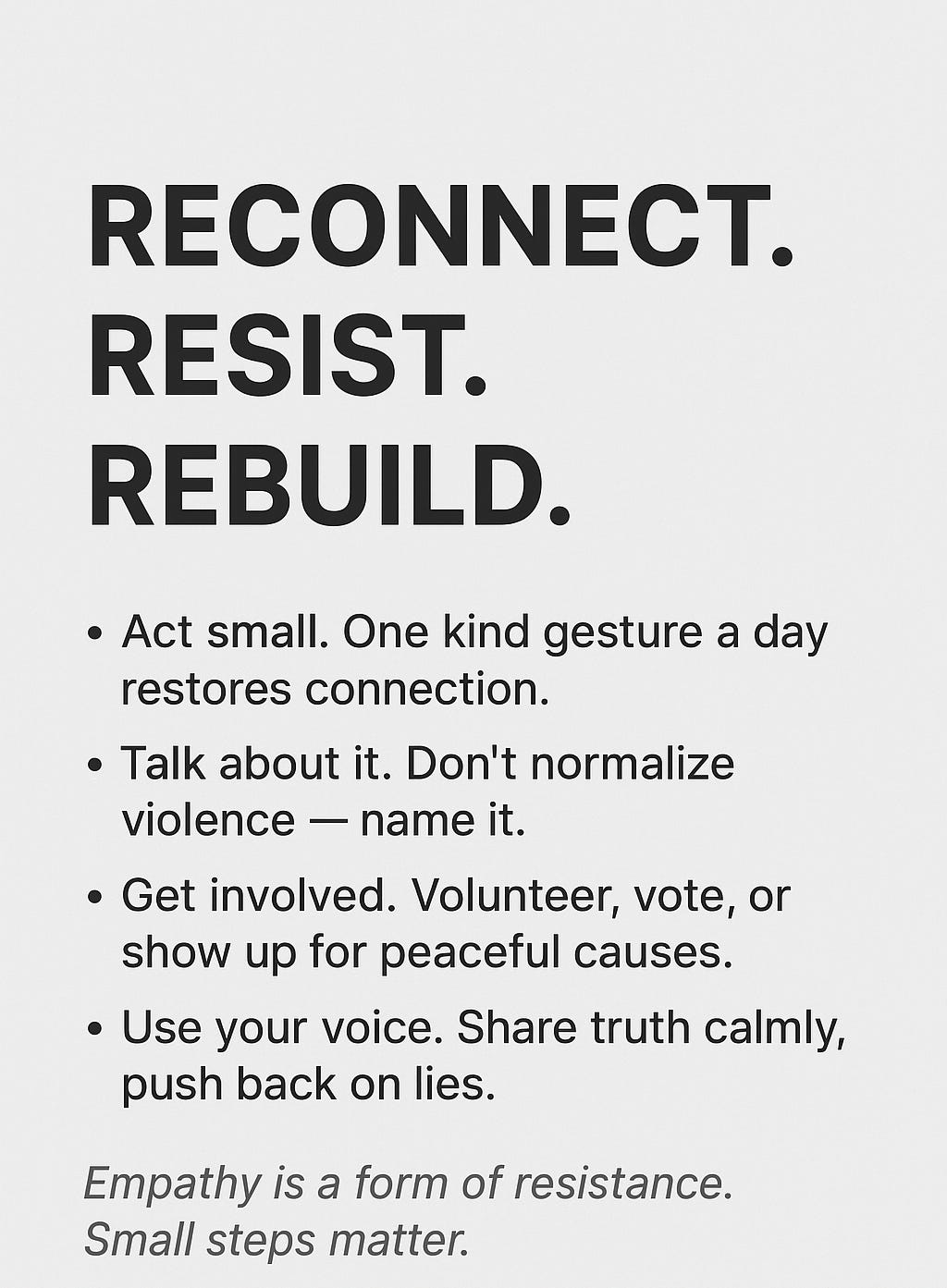
- Getting involved: A friend of mine recently reminded me that we vote every day. Choose your activities wisely each day. There are lots of groups addressing the situation of government lying and instigation of violence. You can join a political or social group, NGO, or support people running for office; or run for office. There are literally thousands of openings in local political offices— from school board seats, to local representatives in Chambers of Commerce.
- Showing up at a demonstration: It is important to show mass support for pro-social issues. If you are afraid to attend, go with friends or people you know. If you attend, be sure to check routes for exit in case things get out of hand. I have attended several demonstrations where rubber bullets and tear gas were used. If you are prepared, no problem. More preparation, less anxiety and fear.
- Writing emails that target perpetrators of violence: President Trump, and dozens of elected Republican officials, heads of police departments, city councils, corporate officers and managers and of course the media that broadcasts lies.
- Using social media to oppose violence under President Trump: You can send positive messages to unions, forward articles to friends, ask the administration for data to support their claims or confront them with facts on X (Twitter). It will matter in the long run, if only because you took an ethical step forward.
Your psychological and social wellbeing can be improved by getting involved, no matter how small the activity; it is better for you than being desensitized and overwhelmed.
Thank you Craig for this important reminder: We all have the power to influence, and even something as “small” as laughing with a young parent’s child, acknowledging our barista with a smile and eye contact, or phoning a friend.. or a bank of friends to get out the vote– that all counts. We as a nation should not forget empathy.
Yep
We are all desensitized.
Part of the plan…make fear normal.
Well doneb
I have a religious friend who is conservative [at least he doesn’t care for Trump]. I listen to his point of view and rationalizations. This allows me to understand how he sees the world. Say, do you realize that the word Democrat starts the same way as does the word “demon?” My friend deflects the things that I gently point out, by saying the the Democrats do the same thing. I just listen, ‘cuz I know that arguing will not alter his views.
As a historian, I see putting troops into American cities as clearly leading to deadly confrontations. Think, the Boston Massacre. I believe that Donald Trump is happy to evoke anger and, eventually, some violence. He will be able to declare martial law. RIghts guaranteed in the Constitution will be halted “temporarily” [yeah, right].
I find the world outside of my own home is especially scary and Halloween was a warning of what ICE might do to children. It’s painful to watch them smash and grab people of color as they did yesterday and I watched them separate a mother and her toddler. The mother was taken away and the two bullies (ICE) got into her car with the toddler and drove off. How does that ease fear and make one feel anything but scared.