
The Sphynx in a pencil tip
Human ingenuity is launching the next industrial revolution. The rise of artificial intelligence factories is transformational. Post-industrial society is increasingly organized by AI intelligent networks and automated creations. The knowledge of the last 10,000 years can be accessed and reformatted through natural language inquiries in seconds. Individuals will not know if a new material, image or work product was created by a human, machine, cyborg or a combination of both. It won’t matter to the buyer.
Companies like Nvidia and Super Micro Computer, to mention a few, are building new products that represent a qualitative leap in human production and capabilities. Consider that one Nvidia Blackwell processing unit contains 208 billion transistors in a card roughly 4 inches by 5 inches. Nvidia, a U.S. company, currently produces 95% of AI processing chips, and has grown 40X to $80 billion in revenue in 12 years.
Microsoft has unleashed the power of Chat GPT into our mobile phones. Built on natural language models and inquiries, it has laid the groundwork for ‘generative AI’, which goes beyond the information given to generate inferences and new productions. Due to its early stages of development, not all inquiries go according to plan. Google’s AI, for example, recently matched racial diversity with U.S. founding fathers, who were all white men. Humorously, some inquiries answered ‘use glue in pizza dough to stop the cheese from sliding’.
Artificial intelligence (AI) is an unfortunate rubric. AI is as human and real as anything else homo sapiens have created. It is simultaneously a tool, a method of thinking and production, and a cultural artifact all wrapped into one. Think of it as an extension of your brain and nervous system living outside of yourself and incorporating the highest division of labor known to our species. Computer and cognitive scientists, engineers and programmers of all types, linguistic specialists, physicists, and applied specialists in various academic domains have all come together to enhance human capabilities to solve problems. A snapshot of immediate and life enhancing applications include agriculture and medicine.
Agriculture innovation
Agriculture increasingly relies on new ways of generating field data in order to increase yield and manage climate change. AI is being applied to help manage responses to weather patterns, and ground temperature, to seed productivity, and water requirements, to soil and mineral composition, to rapid pest evolution and overall crop productivity. Traditional farming, based on individual farmers’ native empirical observations, is insufficient to farm effectively. The Farmer’s Almanac has given way to field robotics and AI enhanced crop learning models. Farm productivity, under conditions of climate change, requires AI to feed the world’s population.
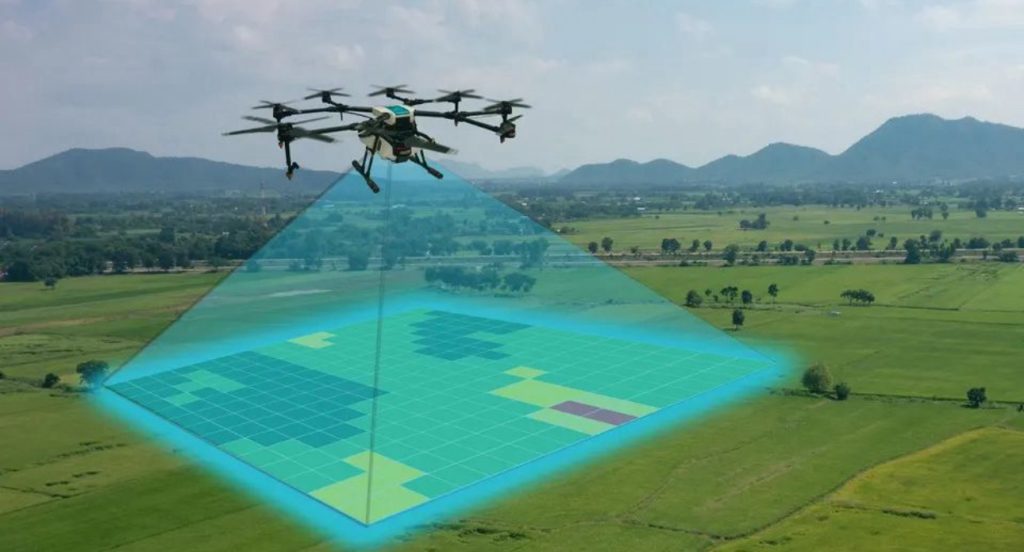
While AI is boosting agricultural productivity, it also poses environmental challenges. The vast data centers powering AI require immense amounts of water for cooling. Companies like Google and Microsoft are drawing hundreds of millions of gallons of water to keep these centers operational, often impacting local water supplies and ecosystems.
Medical wonders
Perhaps the most profound AI applications are occurring in medicine, where AI is being applied to curing cancers. Cancer begins with one renegade cell, multiplying to billions of cells in an area the size of a teaspoon. Each cancer is different in type, and structure. Biotechnology companies are now using AI to develop and deliver single molecules targeted to specific cancers. This is yielding positive and significant results in breast cancer, bladder, lung, and skin cancers, with cures immanent in our lifetime.
Imagine an AI platform with a data library of say 50,000 molecules available to target various cancers. The AI and its learning module can work 24 hours a day and generate millions of combinations to obtain the right molecules to target and arrest cancer. From a different perspective, targeted molecules are being used to strengthen an individual’s immune system by helping cells defend themselves against trickster cells, cancer. The entire field of biology—computational biology— immunology, and molecular medicine are undergoing radical innovation. This is also occurring at the level of genetic sequencing as advanced ‘crisper technology’ is being used to alter the genetics of disease.
Value creation
AI will, no doubt, have the greatest impact on work, and value creation. This is due, in part, to the dramatic effect that AI has on labor productivity. Far less labor is required to generate significantly higher levels of productivity and ultimately, social wealth. Based on AI mediated work, data and inference programs, individuals may require 40 to 50 percent less labor to produce the same economic outcomes. Everything from flipping burgers, to picking fruits and vegetables, to managing production of all types, to packaging, handling, and distribution, to producing any product—digital or real—will be affected. Efficiency is leaping.
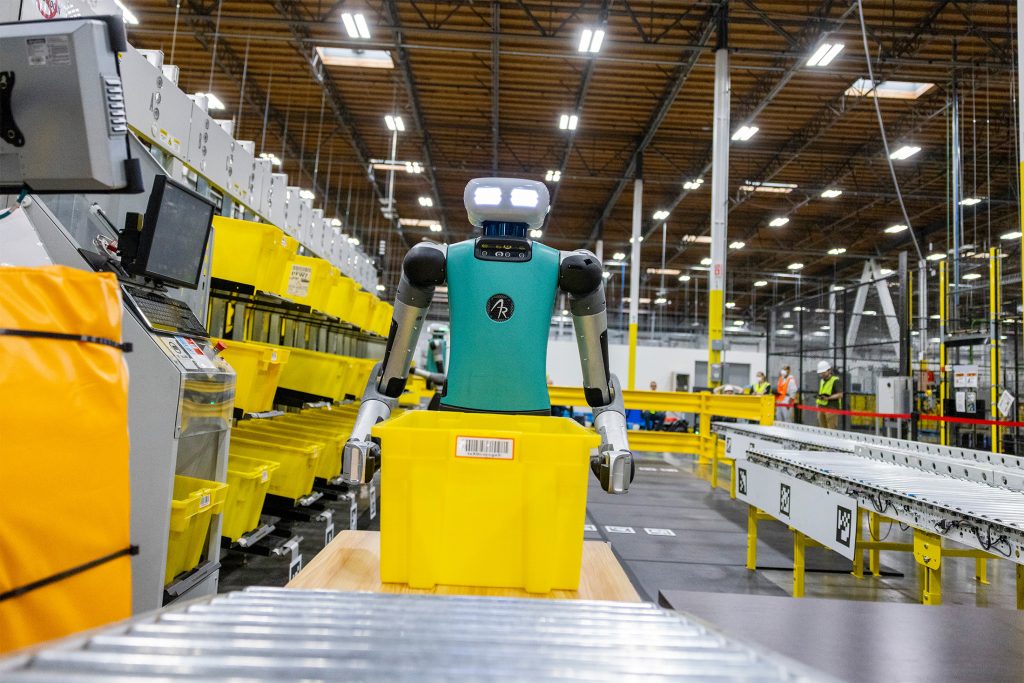
AI and applications multiply productivity and value creation beyond any technology to date. Not long ago, for example, I was invited to visit a completely automated warehouse driven by AI, robots, and solar power. The warehouse is approximately 100,000 square feet, and completely dark, as its staff of 5 robots required no light to operate effectively. These 5 robots, with explicit instructions, picked and packed 1 million cases of wine annually, stacked on shelves to 24 feet high, working 24 hours daily. There were 8 individuals in the front office, and two full time engineers, with shifts round the clock. The primary packers, the AI-driven robots, require almost zero downtime, and generate no social security payments or benefits. The robots are leased with little immediate capital outlay, and their costs are amortized over five years. There are no labor issues.
New economics
Mainstream economists offer little to address the emerging AI economy and its dramatic effects on value creation. They are trapped in a system of incremental change, addressing value creation in terms of providing employees a few more cents or dollars per hour, or changes in tax policy or other methods of economic redistribution. They actually hide behind a set of supposedly immutable, scientific principles offering a ‘forever and always’ view of value creation and capital accumulation. Their ‘science’, which is more like metaphysics, is used to rationalize an untenable and dangerous situation.
Income inequality in the U.S., for instance, is the highest of any G-7 nation, whereby 10 percent of the population owns more than the bottom 90 percent combined. To maintain their standard of living, Americans generated $17.3 trillion in household debt in 2023. A sizable portion of this debt is attributable to credit card balances, which grew by over 16 percent. Credit card payoffs are not usually connected to asset building. In other words, the balance on the credit card may be reduced or eliminated but the items purchased are, most likely, depreciating in value. It is a vicious economic circle.

Income inequality also occurs globally. Consider that the 10 richest men in the world own the equivalent assets of 3 billion people, or 2 percent of the population own more than the entire bottom half of global household assets. Concentration of wealth has grown rapidly over the last century, and significantly over the last 30 years. Technology contributes significantly to capital flooding up and trickling down.
Without fundamental change, AI and applications will drive income inequality further off the charts, and begin to dissolve the American, and global dream of economic self-sufficiency into a highly productive, debt ridden nightmare with no end in sight.
If economic value can be produced at incredibly high rates with far less labor, then it is necessary to redefine who owns the value created. We must begin to address three questions immediately and sideline mainstream economists:
- What is the result of AI replacing vast numbers of employed people? Will individuals be upskilled, de-skilled, or simply displaced from work? What will they do?
- What social and economic models can we develop to redress hyper value creation?
- Who will own the increased wealth generated by AI and new technologies?
It is time for a genuine technological revolution. We need to:
- Confront our leaders in the press and social media, at the local level, and workplaces to reduce income inequality and share more of the wealth being generated by AI and new technologies. This is imperative for the strength of our national economy, economic justice and psychological well-being.
- Talk with friends about the new AI-driven revolution in productivity, which necessitates a new code of value creation and participation. Anything less leads to relative poverty and economic marginality.
- Raise awareness among younger persons by discussing income inequality and how it affects them now and in the future. Express values of economic fairness and justice. Creating high levels of value while charging up credit cards to meet expenses is not an indication of a viable economy.