
250 years of false promises and missed opportunities
The primal myth
The American Revolution is America’s primal myth, a kind of secular creation story that helps drive our sense of uniqueness in the world. The ‘Revolutionary War,’ according to this story, was fought from 1775 to 1783 and won by 13 of Britain’s North American colonies against Great Britain.
The Declaration of Independence consecrates the revolution on July 4, 1776. It was a “revolution” led by our “founding fathers,” who structured political power, fought the battles, and signed the founding documents. Almost every schoolchild in America learns this story, and we celebrate American Independence Day every July 4th.
The story of the Revolutionary War was recently presented by Ken Burns, a well-known documentary filmmaker, who produced a six-part, 12-hour documentary for PBS. While the film is full of battle scenes between colonial and British soldiers, it guts the concept of revolution and confuses revolution with an anti-colonial war against Britain.
In order to move forward politically, we must remove the masks of our inheritance—masks that paved the way for right-wing politics and the concentration of wealth—and create new social goals, values, and economic relationships. America’s first revolution is yet to be enacted.
Nagging questions
After studying revolutions for over five decades, I began to question the “American Revolutionary War” on a deeper level: What if the so-called revolution was not a revolution at all, but an anti-colonial war against Great Britain to increase wealth and exploitation in the colonies? Why would rich white men in the colonies want to lead a revolution that would be violent and costly? And why would America’s power elite and government celebrate a “revolution” every year on July 4th?
Perhaps the concept of revolution was misrepresented to avoid any real social, political and economic change. Perhaps July 4th serves as a mask for social and economic tyranny that was never addressed in practice. It’s safer to imagine a revolution than to undertake one.
Colonial leadership was motivated by land speculation and capitalism, not revolution (Speculation Nation, 2023). The British king and Parliament were replaced by state power after the “revolutionary war” in 1783. Many small farmers went bankrupt after the war. They could not pay their mortgages or debts in an economy running roughly 30 percent inflation, and merchants successfully lobbied state legislatures to raise taxes on goods so that the merchants could clear their own debts.*
States confiscated farmland for auction and threw debtors into prison. Auctioned farmland was readily purchased by wealthy colonists who had access to hard currency — Spanish silver dollars, gold and silver coins. Some states would accept only hard currency and jockeyed for deals with speculators (Money in colonial times, 2026). State power and local courts helped consolidate wealth. It was a clear case of class warfare that has lasted for centuries and continues today.
These were the very same farmers who fought against the British and helped make the war possible by accepting nearly worthless paper currency, as payment for their military service.
The Revolutionary War cemented existing rights and the existing distribution of social and political power. It never delivered on its ideals, because it wasn’t designed to do so.
Origins of revolution
Revolutions begin as acts of imagination. An individual or a small group redresses grievances by envisioning and rearranging social and economic reality over a short period of time. Revolutions aim to bring about qualitative changes in individual and social rights, in the production and distribution of wealth, and in freedom of expression. Revolutions represent ruptures with existing norms, values and power structures.
Revolutions are difficult to maintain because power elites defend the status quo by sidelining radical leaders and deploying state violence, militias, and legal frameworks. They also use media, whatever its stage of technological development, to try to control the terrain on which power is contested.
Escape from revolution
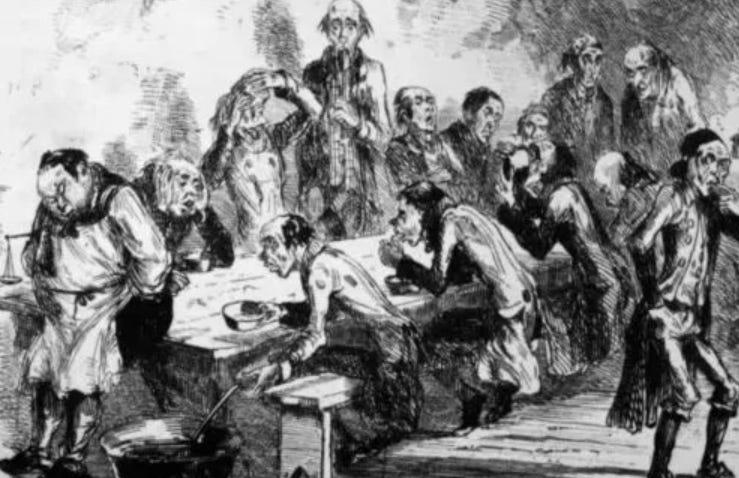
The “Revolutionary War” did little or nothing for the vast majority of people living in the colonies. At no point after the “revolution” did enfranchisement, the ability to vote and be represented, exceed 7 to 10 percent of the population, depending on the state. Put differently, roughly 90 percent of individuals were excluded from power or representation.
This exclusion included poor people who owned no land, or land of insufficient value, women, indentured servants and slaves. It lasted decades for white men with limited property, depending on the state, roughly 90 years for slaves, and over 140 years for women. There is no data to support the case for radical change or revolution.
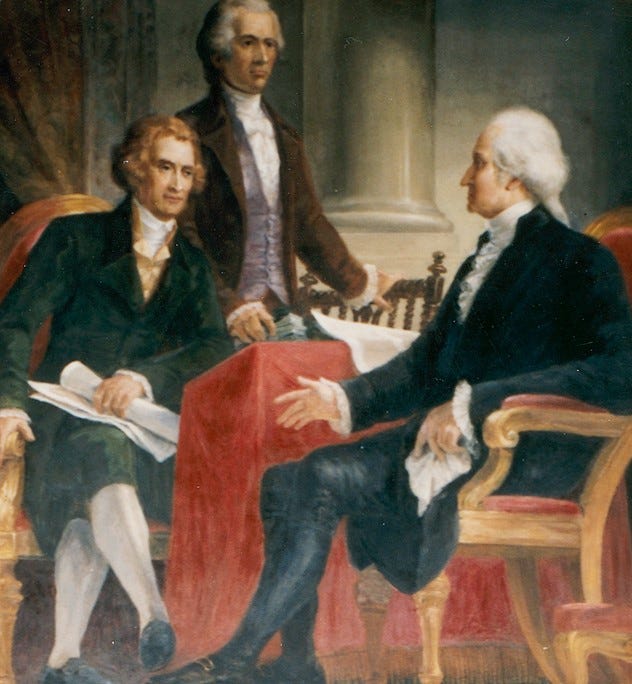
George Washington and Thomas Jefferson, who were well-known leaders of the “revolution”, were immensely rich. They owned large plantations, roughly 700 to 800 slaves, and a combined net worth of an estimated $450–$500 million. in today’s dollars. John Hancock, a well-known signatory to the Declaration, was worth $75 to $80 million.
Their revolt against Britain was understandable: they sought to expand their wealth, increase their land holdings, and pay lower taxes. Today’s billionaire class, many of whom influence politics, would be proud of their inheritance.
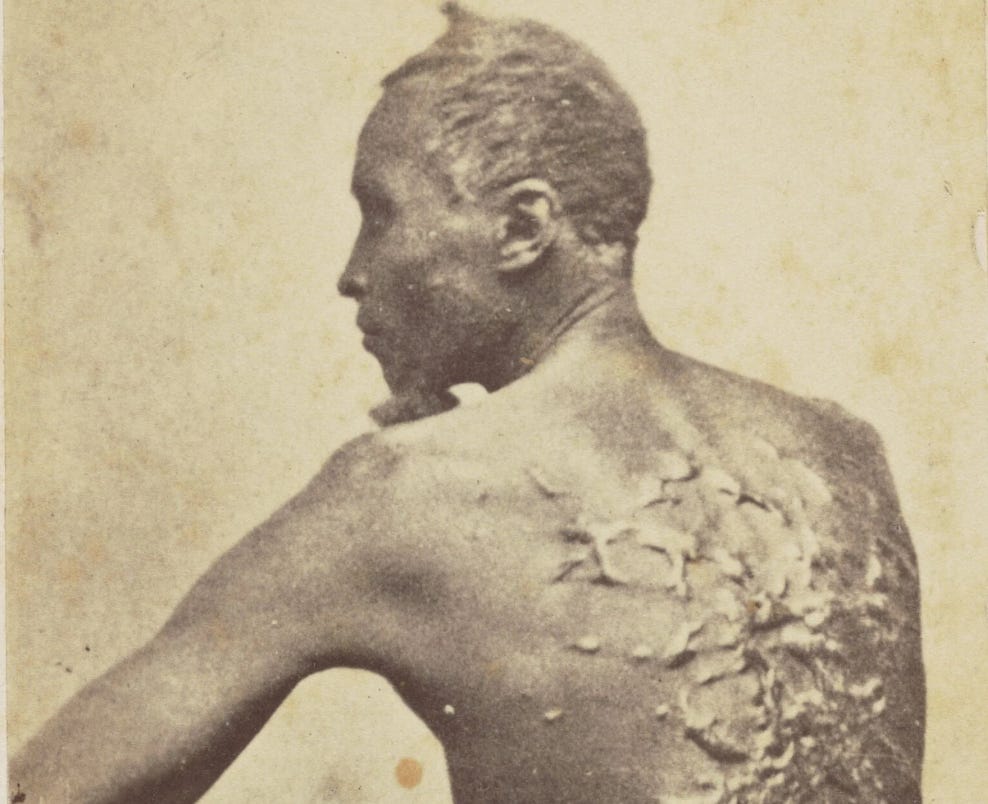
The men who wrote about liberty policed it aggressively at home. Escapees made up only 1 to 3 percent of the enslaved population, and Washington had his escaped slaves pursued across state lines. Jefferson, drafting the Declaration of Independence, performed a sleight of hand that foreclosed both revolution and freedom for the people who most needed them. Roughly 500,000 enslaved people —one in five— and some 75,000 indentured servants lived among 2.5 million colonists. None of them were included. Neither were women, who would wait more than 140 years for the vote.
Consider the trap set in the Declaration’s most frequently quoted passage:
“We hold these truths to be self-evident, that all men are created equal, that they are endowed by their Creator with certain unalienable Rights … Life, Liberty and the pursuit of Happiness.”
This, at first glance, appears radical. A document declares citizens free to pursue liberty and happiness. A worthy ideal. A closer reading, however, reveals something else. The Declaration’s statement of freedom is based on natural rights, with the creator invoked as authority. It says people are free under God, not law. It mentions no equality under law. The rights given under the law would not have applied to poor individuals, women, and enslaved Black people.
The logic and intent of the passage are clear: eliminate the potential for revolution. Domination was legalized under natural law: lack of voting rights for most, male financial control over women, and the ownership of slaves were hardened into law. Jefferson could never sell a real revolution or fundamental change to other landed farmers and slaveholders. He consciously crafted the status quo to protect the power elite in the colonies.
Owners rented slaves out to other farms and wrote passes permitting them to travel for work. A person who could write could forge that pass, and a forged pass was a road to escape. Denying literacy was therefore customary — and in South Carolina and Georgia, already law.
The Constitution went further. Three provisions — the three-fifths clause, the fugitive slave clause, and the twenty-year protection of the international slave trade — wrote slavery into the nation’s founding law. It was ratified in 1788 and took effect the following year. Our founding fathers and political representatives secured a free ride on their capital investments and profits in farming. The unpaid labor of slaves from the Revolutionary War to the Emancipation Proclamation nearly 90 years later in 1863 is estimated at $14.2 trillion (Thomas Craemer, University of Connecticut); other economic models suggest U.S. liability at $17 trillion (3% interest, 2009 dollars)*.
Married women were forbidden to own property or earn wages, and were unable to sign contracts with legal standing. Husbands had complete financial control over their wives, whose independent identity was not recognized under law; their domination was codified under the English common-law doctrine of coverture. Interestingly, the colonial “revolutionaries” kept the laws of coverture intact. Perhaps a slight oversight.
Domestic abuse was also common. Husbands could, at will, beat their wives and children. Husbands taken to court for beating their wives almost always prevailed. (Colonial court records 1775 to 1778). Two and a half centuries later, the reflex survives. Pete Hegseth was confirmed as Secretary of Defense despite a sexual assault allegation and a 2018 email in which his own mother accused him of mistreating women.
In some ways the postwar settlement made things worse for women: it recast the relationship between husband and wife as a private matter, and private matters were harder to prosecute. The Violence Against Women Act wasn’t enacted until 1994, 218 years later. There was no qualitative social change for women.
National sovereignty
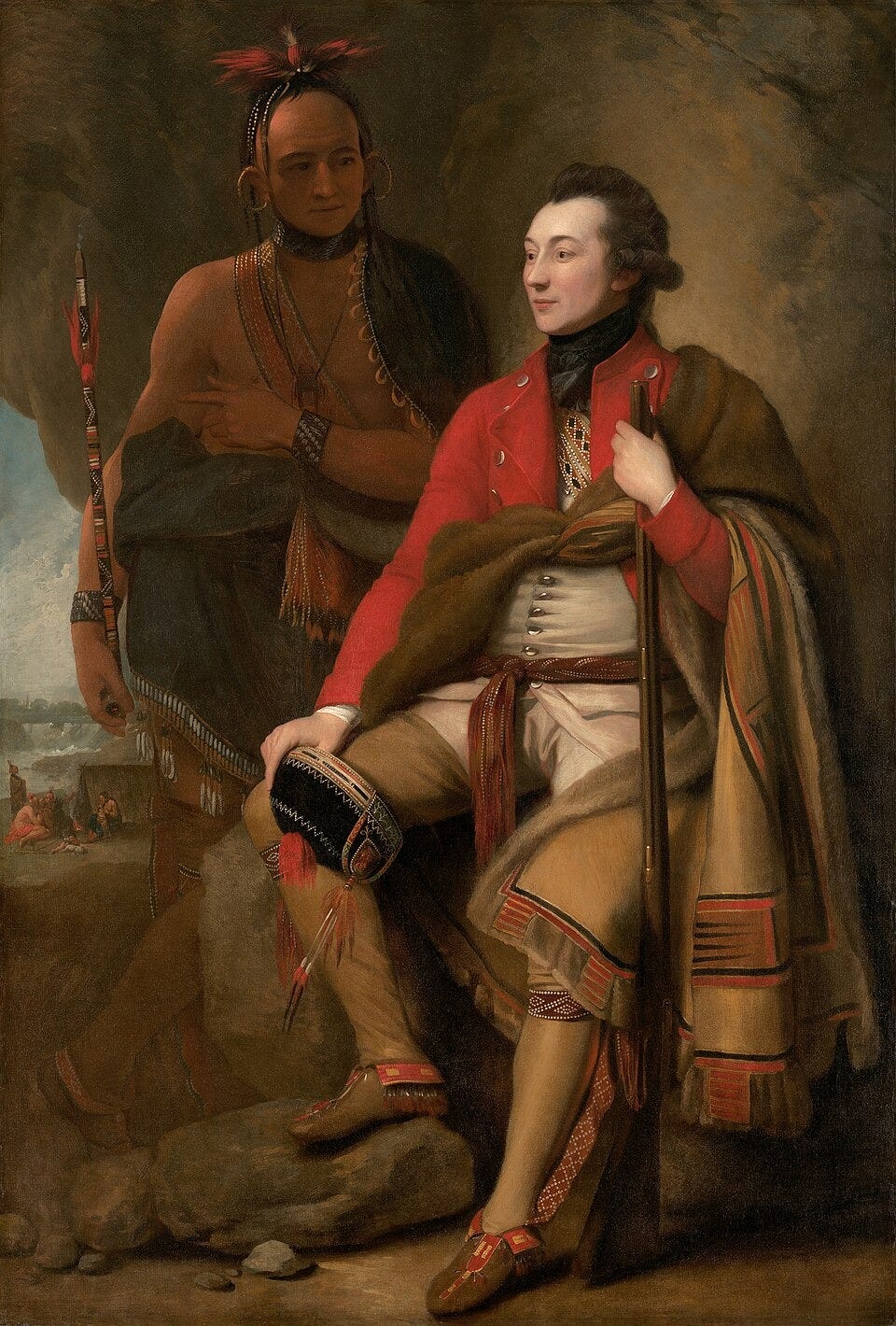
America won the colonial war against Britain. As part of the Treaty of Paris (1783), Britain transferred over 830,000 square miles of territory to America. This doubled the size of the new nation. The only problem was, it didn’t belong to Britain. It belonged to Native Americans. President Washington proceeded to unleash a scorched-earth campaign against Native Americans to capture land. Thousands of “Indians” were killed.
The “American Revolution” fueled one of the biggest land grabs in American history. Land became an asset to be monetized. Historians refer to it as a “mania” land grab (Speculation Nation, 2023). I refer to it as a genocide in which settler populations terrorized Native Americans, raided their land, claimed title to it, and starved them*. This is not unlike Israeli settlers and the IDF terrorizing Palestinians in Palestine today.
Washington, as a grand gesture, refused military pay and asked to be reimbursed for expenses instead; the account he submitted at the end of the war ran to roughly $450,000, nearly ten times what the salary would have paid. He was also rewarded with access to large tracts of frontier land at low or no cost. He used land as an asset to issue military warrants to acquire even larger tracts of prime land in Kentucky, for example.
In his private diary, he notes, “any Person therefore (Indians) who neglects the present opportunity of hunting out good Lands & in some measure Marking & distinguishing them for their own (in order to keep others from settling them) will never regain it.” He further notes, “I would recommend it to you to keep this whole matter a profound Secret, or Trust it only with those in whom you can confide.” (Washington, Diaries, 1784-1785). Military power became nine-tenths of the law in the new republic.
Benjamin Franklin, a folksy American character with wire-rimmed glasses, made backroom deals with land speculators to try to obtain 20 million acres of land at almost no cost. Almost every representative to the Continental Congress was in on the take. They preferred land grabs from “Indians” to social justice. They embedded self-dealing into their office and provided historical precedent for President Trump and his family businesses.
The spoils of productivity in the field went to wealthy white planters. This was especially true in the Southern States where cotton became king. Within ten years of the “revolution,”10 percent of white households owned 70 percent of the regional wealth. After the invention of the cotton gin in 1793; a slave could process 50 times the amount of cotton in a day as before. This technology accelerated the demand for slaves by sevenfold, growing from 500,000 in the North to 3.5 million in the South*.
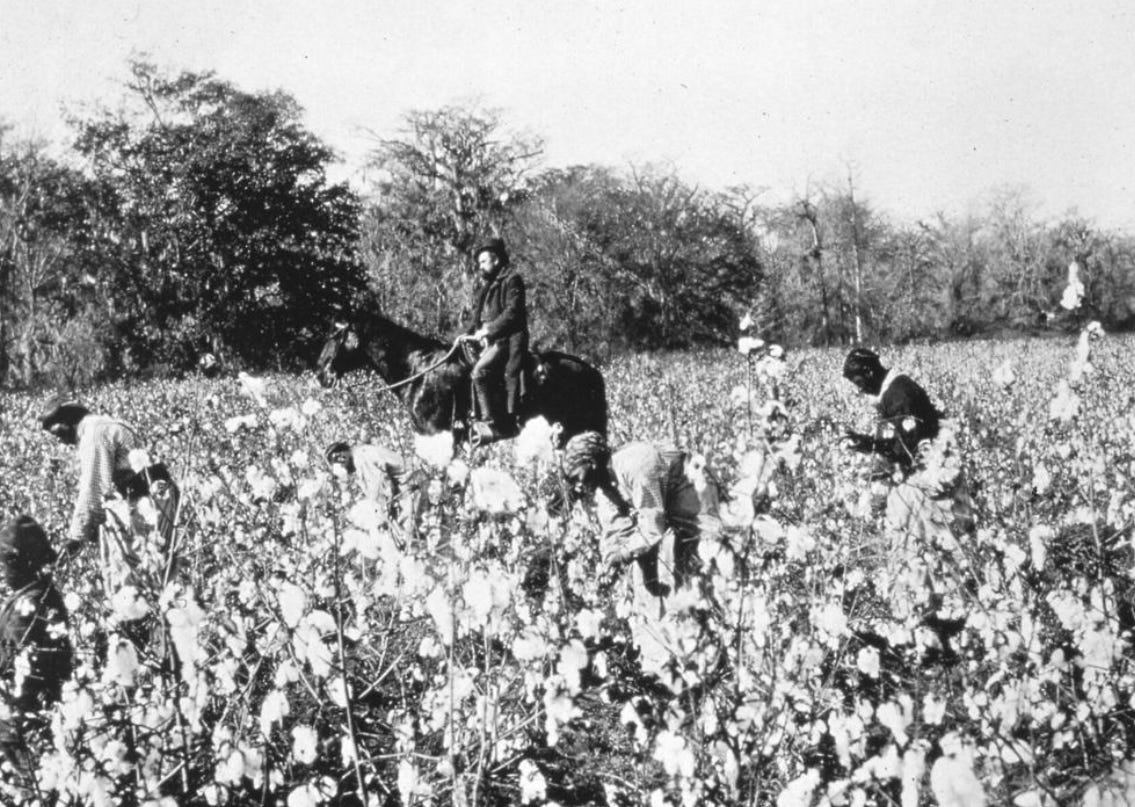
The plantation system exploded, further impoverishing slaves who never recovered from the introduction of the cotton gin. The dynamic is not unlike the gap between workers’ wages and the capital generated by technological innovation today.
Conclusion
The “Revolutionary War” was an anti-colonial war against Britain in which owning classes, merchants, and land speculators significantly added to their wealth. There was no revolution. Small farmers went bankrupt or became financially marginal. State governments, courts, and the military served capital in the theft of land and labor. America’s economic prowess depended on technological innovation and an economic free ride—slavery. Women, in addition, were denied payment for their work.
America sidelined its true radicals, who offered hope for new freedoms and a more equitable economy. The first genuine revolution has yet to be undertaken. It is overdue.
*Princeton University, American Revolution archives, 2026.
Boy is it overdue.
I do think some of the ideals held in our early days have encouraged citizens to strive for a better and more just system.
Our ” Revolution ” was a tiny beginning for a movement that one of the days we may embrace. Rich white men will not lead this movement.
Our systematic inequality does not allow for a revolution ….step one towards a revolution will be an economic. No white guys will give up wealth and power to join the people. No government will make a truly equitable adjustment toward economic fairness. People will have to take it. And then what?